
Starting with basic toy car frames helps kids get comfortable with asking those important questions and coming up with ideas for fixes something central to how science works according to NGSS guidelines. Tinkering with wheel attachments to cut down on friction shows exactly what the K-12 Science Education Framework talks about when it mentions defining problems, doing research, building prototypes, testing them out, then making improvements. What's interesting is how this back and forth approach actually resembles what real engineers do day after day. Students learn not to fear failed attempts but instead see them as just another step in figuring things out through trial and error.
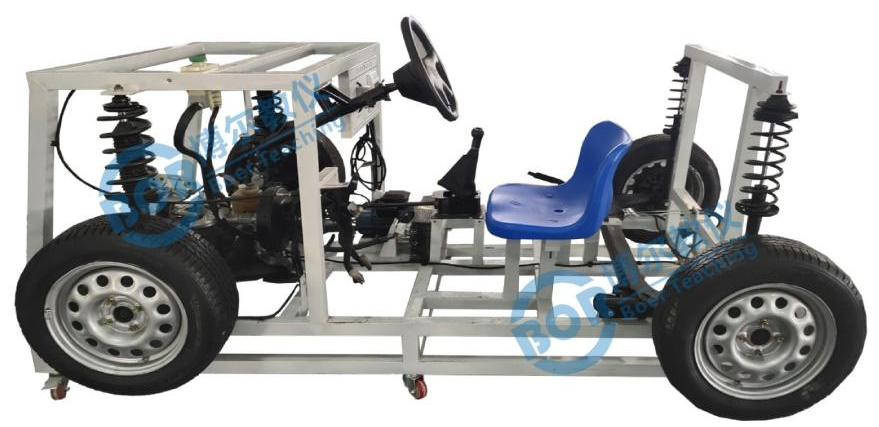
When theoretical physics meets real world limitations, things get complicated fast. Take balsa wood frames for instance they save weight and boost efficiency, but won't hold up when hooked to motors over 5 volts. Then there's the tires problem nobody wants wheels spinning uselessly, so we need enough grip without creating too much resistance. Too smooth and they'll spin out, too aggressive and they just slow everything down. Working through these kinds of compromises teaches kids how to think creatively inside boundaries something NASA actually backs up in their studies about how limitations force people to find better solutions when dealing with multiple conflicting factors at once.
| Phase | Student Car Project Example | Engineering Skill Developed |
|---|---|---|
| Problem Definition | "Design a car to carry 200g uphill" | Requirements analysis |
| Solution Exploration | Testing balloon vs. rubber band power | Alternative evaluation |
| Prototyping | 3D-printing interlocking gear components | Technical precision |
| Testing | Measuring voltage drop during acceleration | Data-driven validation |
| Optimization | Reducing axle friction with bushings | Continuous improvement mindset |
This structured progression makes abstract engineering concepts concrete. Teams that document each iteration demonstrate 47% deeper understanding of core principles compared to peers engaged in theoretical study alone.
When students build their own cars as part of engineering projects, they get to see how rotational forces work in real life through the wheel and axle system. What happens when friction isn't even across all surfaces? Well, that creates torque problems which throw off the whole motion pattern something right out of Newton's laws. Getting everything aligned properly makes a big difference in reducing drag while getting more energy from each movement. According to a study published last year in the Engineering Education Journal, if wheels are even slightly off track just 15 degrees worth of misalignment can lead to almost 18% more friction loss. And during those tricky turns, the way resistance shifts between different axles gives hands-on experience measuring angular momentum. Students often run multiple timed trials to tweak their designs and improve how well their creations handle direction changes.
| Material | Stiffness (MPa) | Relative Weight | Student Workability |
|---|---|---|---|
| Balsa wood | Low (1-2) | Lightest | High - hand tools |
| ABS plastic | Medium (30-40) | Moderate | Medium - molding |
| 3D-printed frames | Variable (15-50) | Light | High - customizable |
Different materials come with their own pros and cons when it comes to building prototypes. Take balsa wood for instance it's great for quick builds but tends to buckle when things get stressful during testing. On the other hand, 3D printed frames offer something special they let designers tweak shapes and angles with much more freedom than old school mold techniques ever could. How easy something is to manufacture really affects how fast we can try new ideas. Putting together those laminated balsa pieces only takes about 45 minutes while printing the same part might eat up three whole hours. This difference makes a big impact on managing timelines and keeping projects on track, especially important stuff happening in science and engineering classrooms these days.
Cars powered by rubber bands work by turning the elastic potential energy that gets stored when we twist them into actual movement through special torsion based designs. When calculating how much energy is actually stored, folks use this formula: half times k times theta squared. Here, k stands for how stiff the rubber band really is, while theta represents just how twisted it becomes. In classrooms around the country, experiments have found that the best working models manage to convert between sixty to seventy two percent of that stored energy into forward motion. Teachers often ask students to plot out how far their cars go compared to how many times they wound up the rubber band. This helps kids figure out exactly when too much tension starts causing problems because the materials begin to wear out. The whole process makes abstract physics concepts like conservation of energy much easier to grasp, and also teaches important lessons about measuring efficiency from day one.
Miniature motors transform electrical input into mechanical output in classroom EVs. Under load, batteries exhibit voltage drops exceeding 30%, directly reducing motor RPM. Students use this data to explore system reliability and performance decay:
| Variable | Impact | Mitigation Strategy |
|---|---|---|
| Voltage drop | RPM reduction ≥ 40% | Parallel battery configurations |
| Wheel slip | Traction loss at ≥ 15° incline | Rubberized tread patterns |
| Motor overheating | Efficiency decline | Aluminum heat sinks |
These measurable effects illustrate why commercial EVs prioritize thermal management and torque vectoring, while reinforcing practical applications of Ohm’s Law.
When students work on wind-powered prototypes, they get hands-on experience with fluid dynamics principles. They spend hours shaping those curved sails just right to control how air flows around them, basically putting Bernoulli's principle into practice. The idea is simple enough: when air moves faster over the curved part of the sail, it creates lower pressure there, which generates lift. Some tests show that lift can actually jump by nearly 200% if the curve is deep enough relative to the width of the sail. Meanwhile, special load cells help track how much drag is happening, showing students why flat fronts tend to create all sorts of messy turbulence behind them. Placing vents strategically makes a big difference too, cutting down resistance in ways that mirror the math-heavy optimizations seen in today's car and plane designs.
When building simple electric cars, students work with switches to control things, batteries to keep them running, and gears that help multiply torque. When they close the circuit, the motor kicks in and turns electricity into spinning motion. Testing out different gear setups, say comparing a 3:1 ratio against a 5:1 one, lets them see firsthand why smaller numbers mean better speed off the line and stronger pulling power. Sorting through problems like gears that don't mesh properly or when the battery power dips teaches valuable problem solving techniques similar to what engineers face every day in actual workshops and factories.
The classroom prototypes we build actually show many features found in real world hybrid vehicles. When students work on these projects, they get hands-on experience with how electric motors from batteries can support traditional engine power, kind of like what happens when cars recapture energy while braking. Looking at smaller scale models makes it easier to see how energy moves around different parts of the system, which helps develop that gut feeling about what works best for maximizing efficiency. What's interesting too is watching those little models handle power distribution as they speed up, maintain steady motion, or slow down again. This mirrors exactly what happens inside actual cars, though our student versions tend to have some quirks that make them less than perfect replicas of professional engineering decisions.
Student teams conduct systematic timed trials to gather objective performance data across three dimensions:
This NGSS-aligned approach (MS-ETS1-4) shifts feedback from subjective opinion to measurable outcomes. Repeated trials establish baselines and expose variability linked to traction inconsistencies or drivetrain friction, guiding targeted improvements.
High-speed video captures subtle behaviors like harmonic axle wobble during cornering details invisible in real time. When paired with force sensors measuring joint stress, students identify root causes such as:
This diagnostic method mirrors professional failure analysis, teaching students to correlate empirical data with physical behavior before implementing mechanical fixes.
 EN
EN