EN
EN

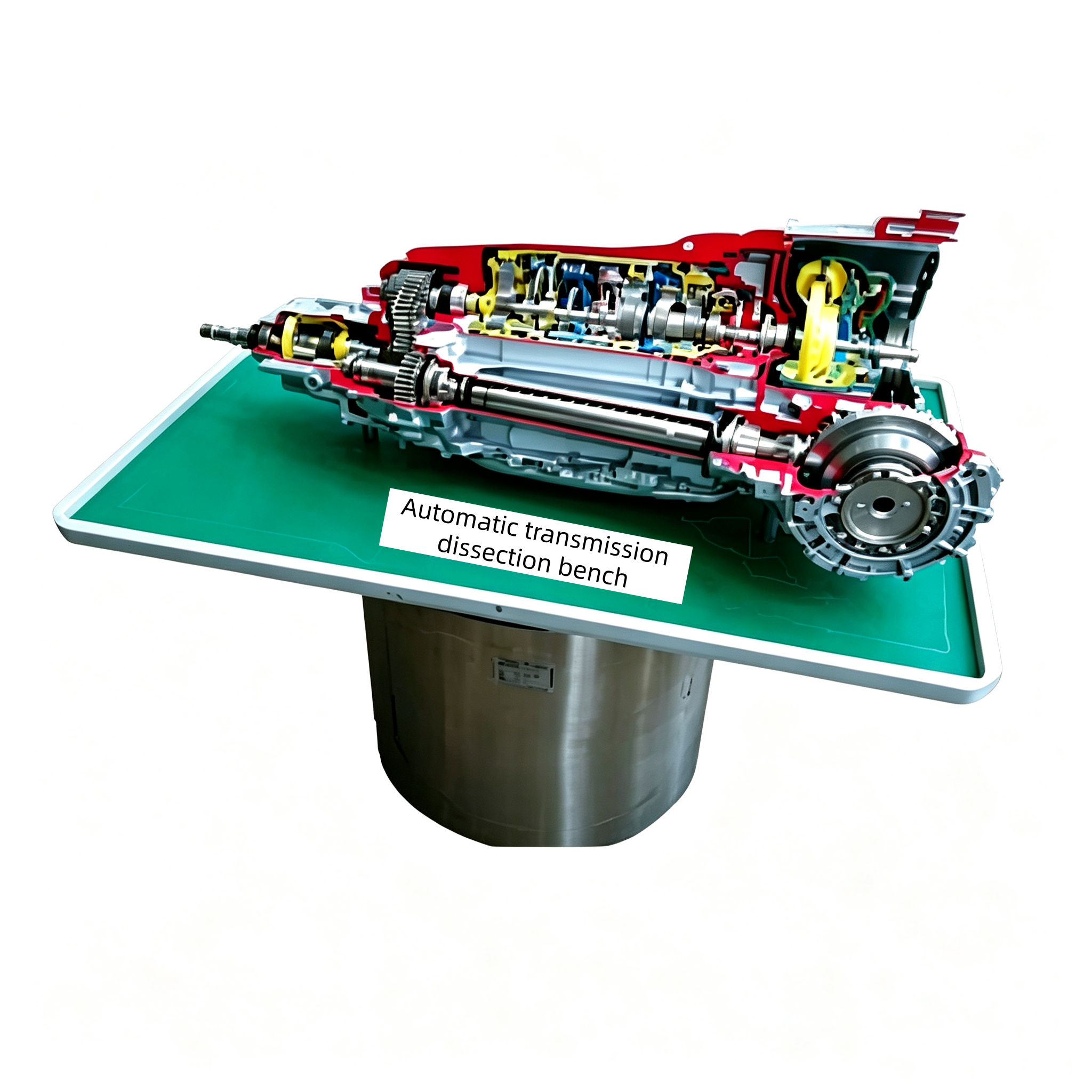
Automatic Transmission Dissection Bench
| OEM Accept OEM Accept ODM |
| Application Training Institute & School |
| Customization Size / Appearance / Material... |
| Function Automotive Training |
| Warranty 2 years |
| Package Wooden Box |
| Technical Support Software / Instruction manual / Video / Technician guidance |
| Shipping Way By Sea / Air / Express |
| Certification ISO9001 / GPSR / Copyrights |
- Overview
- Recommended Products
Automatic Transmission Dissection Bench
I. Product Overview:
This dissection teaching aid uses an original factory transmission assembly, realistically demonstrating the transmission's structure and operating process. It is suitable for practical training in automotive transmission construction and repair in vocational schools and automotive training institutions, meeting the teaching needs for transmission structure, working principles, etc. Main components: Transmission assembly, movable bench, etc.
II. Functional Features:
1. Normal operation of the transmission.
2. The training bench is equipped with safety protection devices such as protective covers for rotating parts.
3. The transmission can undergo actual testing such as gear shifting.
4. A real original factory manual transmission is mechanically dissected, fully demonstrating the internal and external structure of the transmission's mechanical parts.
5. Different colors of paint are used to paint the various mechanical sections of the transmission.
6. The base of the training bench is constructed with a welded steel structure, and the surface of the bench is finished with a baked enamel coating and equipped with omnidirectional self-locking casters.
III. Technical Specifications:
1. Overall Dimensions: 1100mm x 800mm x 1250mm (Length x Width x Height);
2. Operating Temperature: -50℃~50℃;
IV. Practical Training Projects:
1. Demonstrate the structure and working process of a clutch;
2. Demonstrate fault analysis, diagnosis, and troubleshooting based on incomplete clutch engagement and disengagement;
3. Demonstrate the structure and working process of a transmission;
4. Demonstrate the power transmission routes and gear ratios of each gear in a transmission;
5. Explain the structure and working principle of a synchronizer;
6. Explain and demonstrate fault analysis, diagnosis, and troubleshooting of transmission problems such as difficulty shifting gears and abnormal noises; (Transmission model optional);