EN
EN

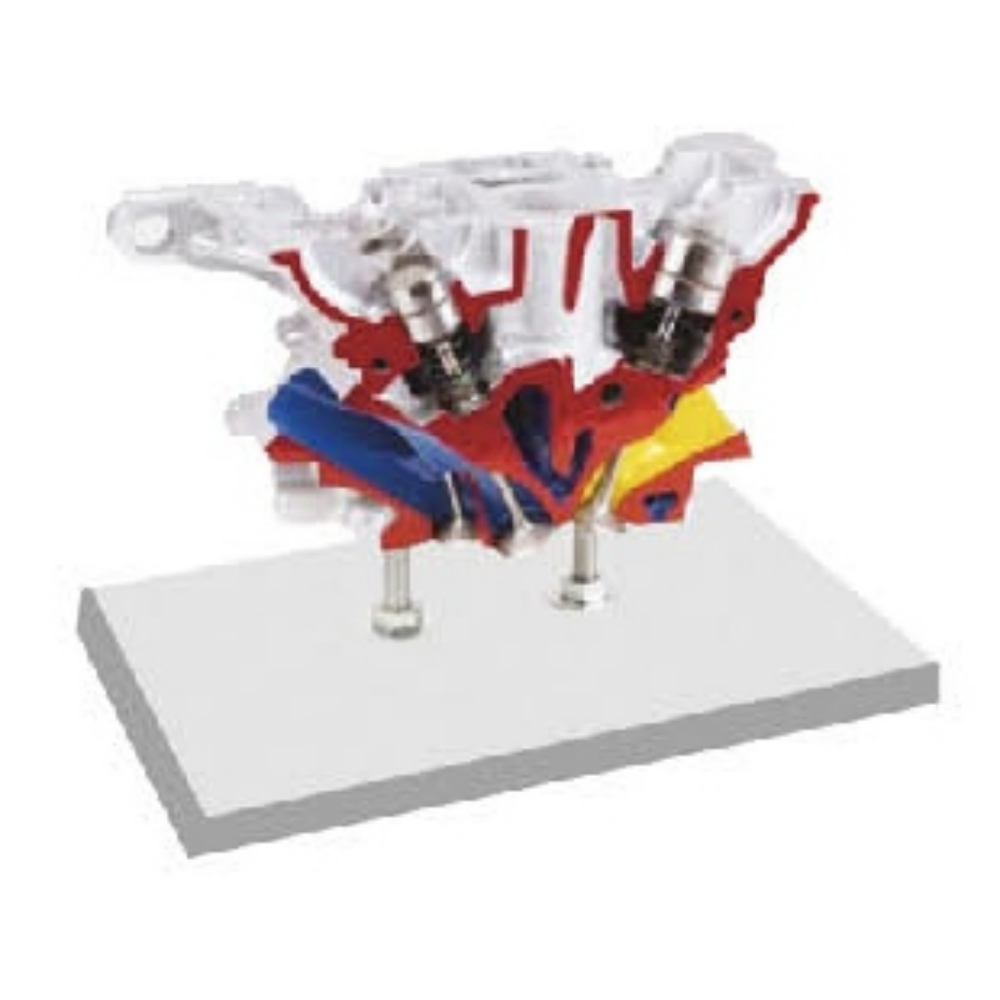
Audi 5-valve cylinder head anatomical model
Delivery: EXW Guangzhou
Shipping Way: By Sea / Air / Express
Certification: CE/ ISO / GPSR / Copyrights / Patents...
OEM Service: Accept OEM Accept ODM
Customization: Logo / Size / Appearance / Material...
Technical Support: Software / Manual / Video / Technician
- Overview
- Recommended Products
Product Overview:
This product is a 1:1 scale engine teaching and training model based on the cylinder head of the classic Audi 5-valve DOHC engine. It is primarily used in automotive schools, training institutions, 4S dealerships, and training centers for teaching valve train structure, working principles, and repair techniques, addressing the problem of the invisible internal structure and lack of intuitiveness in teaching actual engines.
Features:
1. The cylinder head (single cylinder) assembly (with complete accessories) is dissected, showcasing all components and providing a comprehensive view of the assembly's internal and external structure.
2. Different colors are used for each section, clearly displaying the mechanical structure and assembly relationships of the internal and external components.
3. The base frame (with anti-vibration pads) is made of 1.5mm cold-rolled steel sheet, stamped and coated. The anti-vibration pads are secured to the base with M6*4 screws.
Training Project:
I. Basic Training Information
Training Name: Audi 5-Valve Engine Cylinder Head Structure and Working Principle Training
Training Equipment: Audi 5-valve cylinder head anatomical model, special bracket
Applicable Majors: Automotive Inspection and Repair, Automotive Application and Repair, New Energy Vehicles, Internal Combustion Engine Technology
II. Training Objectives
Master the overall structure and component names of the Audi 5-valve engine cylinder head.
Understand the characteristics and advantages of the 3 intake and 2 exhaust valve train layout per cylinder.
Be able to describe the transmission relationship of the double overhead camshaft, hydraulic tappets, rocker arms, and valve assembly.
Be able to demonstrate the valve opening and closing process by manually rotating the camshaft.
Establish a basic understanding of typical cylinder head and valve train malfunctions.
III. Training Content and Steps
Project 1: Overall Structure Observation and External Identification
Project 2: Identification of Components in a 5-Valve Train
Project 3: Demonstration of the Transmission Route and Motion of the Valve Train
Project 4: Observation of the Structure and Principle of Hydraulic Tappets
Project 5: Understanding the Structure of the Intake System and Combustion Chamber