EN
EN

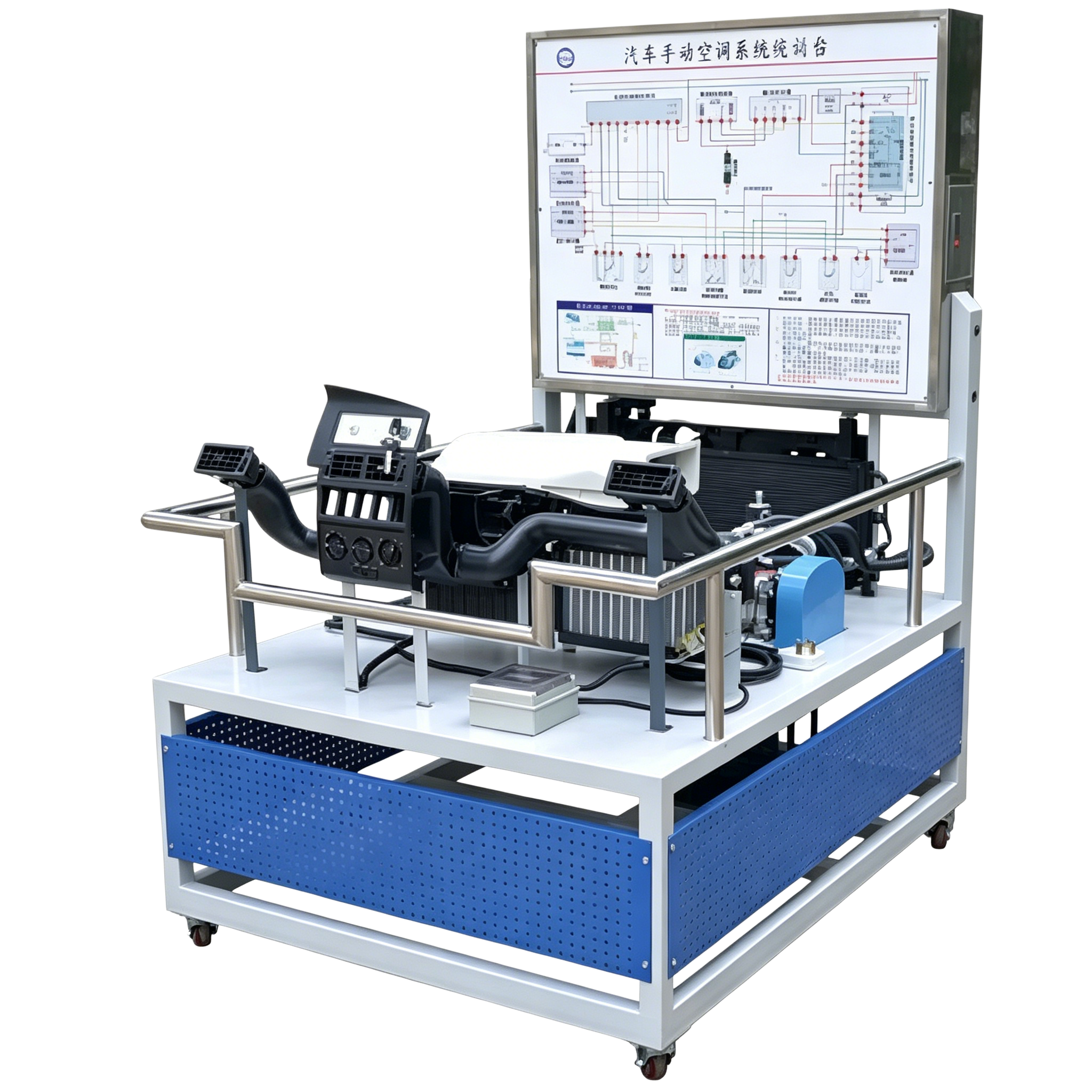
Automotive Manual Air Conditioning System Training Platform
OEM Accept OEM Accept ODM
Application Training Institute & School
Customization Size / Appearance / Material...
Function Automotive Training
Warranty 2 years
Package Wooden Box
Technical Support Software / Instruction manual / Video / Technician guidance
Shipping Way By Sea / Air / Express
Certification ISO9001 / GPSR / Copyrights
- Overview
- Recommended Products
Automotive Manual Air Conditioning System Training Platform
I. Product Overview:
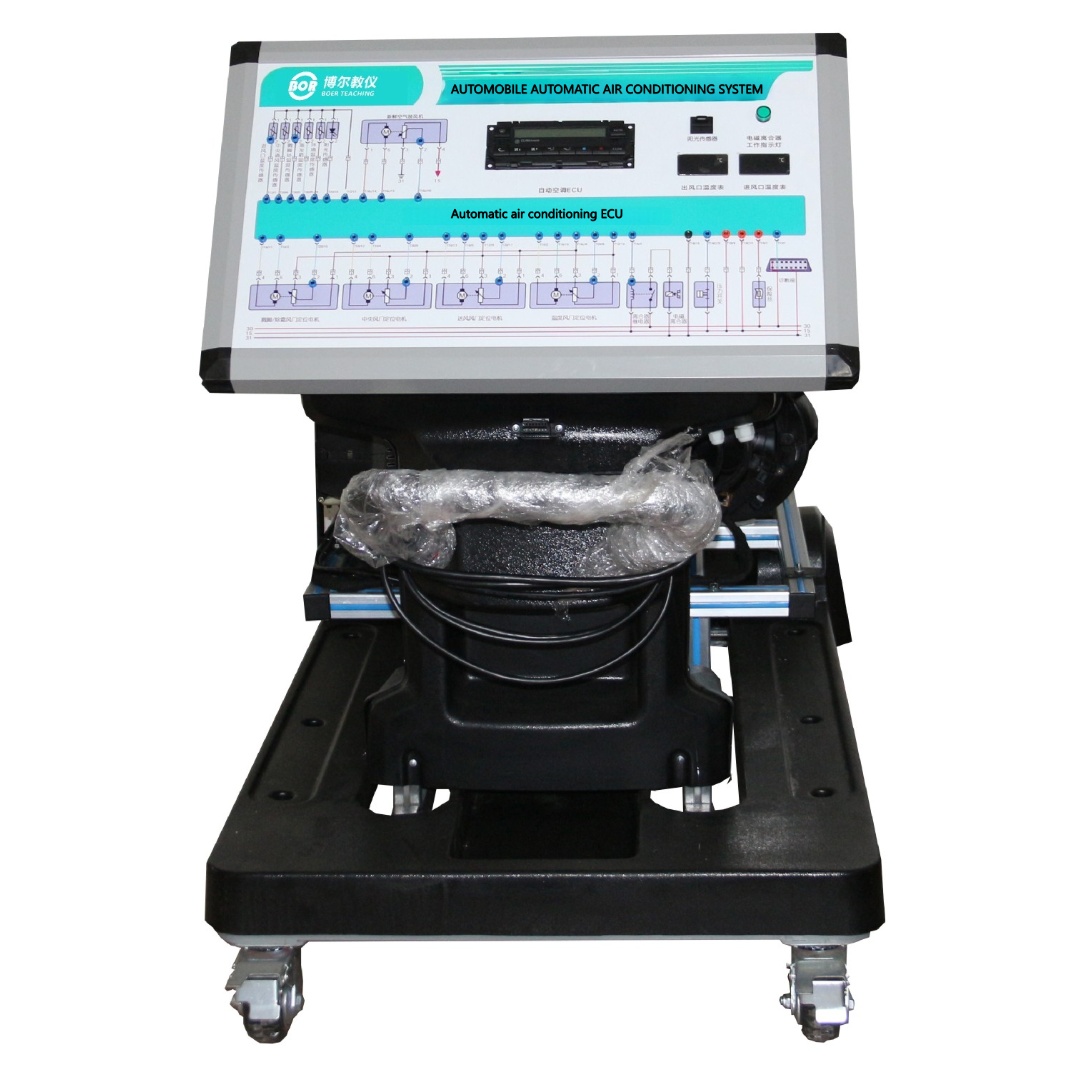
This training platform uses a real automotive air conditioning system as its base, realistically demonstrating the working principles and processes of each component. It is suitable for theoretical learning and practical operation in automotive air conditioning courses at secondary and higher vocational schools.
II. Components:
Electric motor, air conditioning evaporator, compressor, electrical components of the air conditioning control system, pressure gauges, air ducts, air conditioning radiator, dryer bottle, various sensors, high and low pressure gauges, fault setting and troubleshooting box, control panel, large-format color-printed circuit diagram, movable stand, power supply, and training manual.
III. Functional Features:
1. A variable-speed motor serves as the power source, driving the air conditioning compressor. Operation of corresponding functions on the experimental platform panel realistically demonstrates the working principles and processes of each component of the automatic air conditioning system.
2. A digital temperature display shows the interior and exterior temperatures.
3. The air conditioning compressor clutch, condenser fan, blower, etc., are controlled by a 220V converted DC power supply, ensuring both convenience and safety.
4. Airflow can be manually adjusted.
5. A pointer-type pressure gauge displays high and low pressure values in real time.
6. A digital thermometer visually displays the evaporator outlet temperature.
7. Vacuuming, refrigerant charging, and refrigerant leak detection can be performed using specialized instruments.
8. A fault simulation system can simulate actual operating conditions, setting 12 common faults.
9. A digital voltmeter displays the signals from each sensor;
10. After setting a fault, trainees can use specialized instruments to practice troubleshooting and identify the location and content of the fault setting;
11. A fault door, 150*250mm in size, is installed in a concealed location within the testing cabinet; the fault is mechanically set.
12. Car model optional;
IV. Technical Specifications:
1. Nylon swivel casters: 75mm diameter, 35mm width, with locking swivel casters for easy movement and convenient teaching;
2. Panel finish: Aluminum panel with anodized paint finish, UV flat panel high-fidelity color schematic diagram, 10 years without discoloration, fading, or deformation, durable and aesthetically pleasing;
3. 8mm stainless steel detection terminals;
4. 6mm LED indicator;
5. Dimensions: 1600×1000×1800mm;
6. External power supply: 220V AC;
7. Operating voltage: 12V DC;
8. Operating temperature: -40℃~50℃;