EN
EN
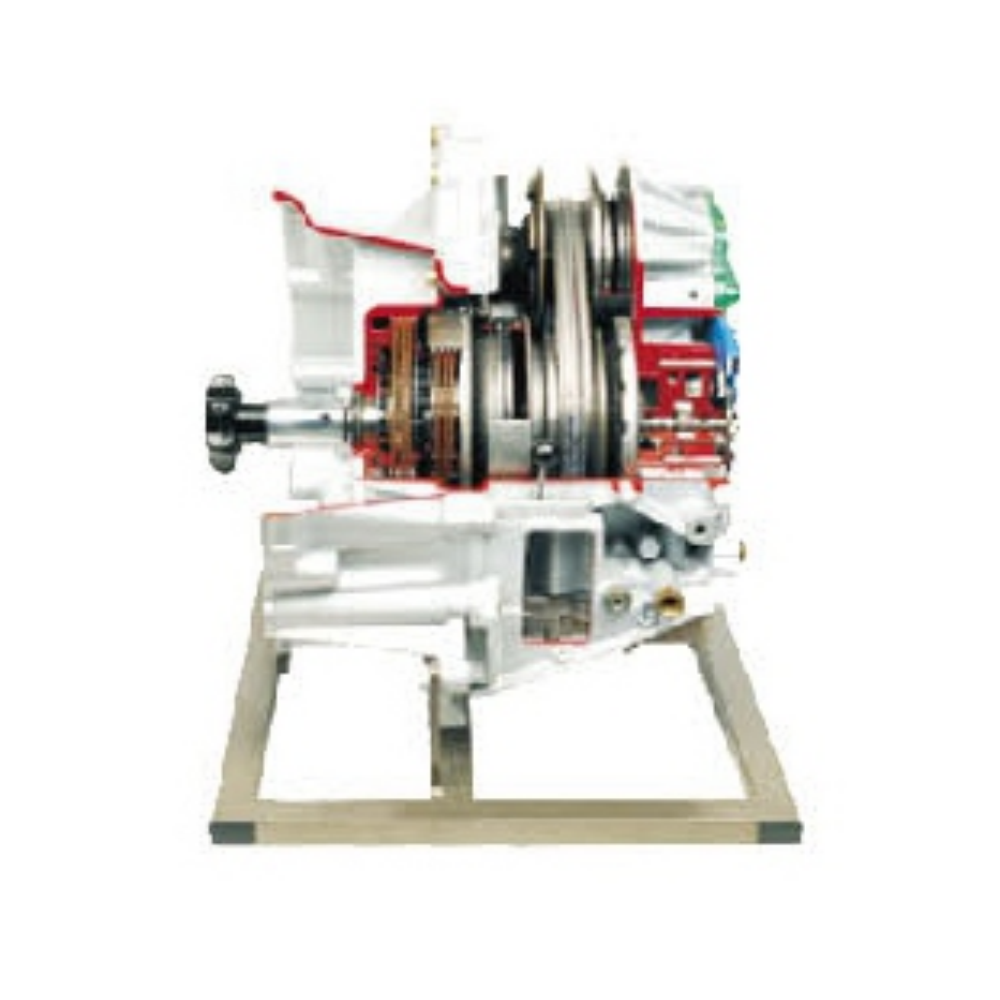
Honda CVT automatic transmission anatomical model
Delivery: EXW Guangzhou
Shipping Way: By Sea / Air / Express
Certification: CE/ ISO / GPSR / Copyrights / Patents...
OEM Service: Accept OEM Accept ODM
Customization: Logo / Size / Appearance / Material...
Technical Support: Software / Manual / Video / Technician
- Overview
- Recommended Products
Product Overview:
This product is a teaching and training model based on the original CVT continuously variable automatic transmission found in Honda models. It has been refurbished from the original assembly, precisely dissected, and professionally color-coated. Its core purpose is as a key teaching tool for automotive vocational education, repair training, and technical demonstrations. It focuses on solving the teaching pain points of "not being able to see, explain, or fully understand" due to the intricate internal structure and enclosed housing of CVT transmissions, helping students quickly grasp the structure and working principles of Honda CVTs.
Features:
1. Dissected using a Honda CVT automatic transmission assembly, all components are complete, comprehensively demonstrating the internal structure of the transmission and the entire process of power transmission during gear shifts.
2. Through dissection and different colors applied to each section, the internal mechanical structure and assembly relationships of the transmission are clearly displayed.
3. Utilizes high-strength steel welding and a surface-coated finish.
Training Project:
I. Basic Training Information
- Training Name: Honda CVT Automatic Transmission Structure and Working Principle Training
- Training Equipment: Honda CVT Automatic Transmission Anatomical Model, Specialized Bracket, Training Task Sheet, Structural Diagram
- Applicable Majors: Automotive Inspection and Repair, Automotive Application and Repair, New Energy Vehicle Technology, Internal Combustion Engine and Power Machinery
- Suggested Class Hours: 1-2 class hours (can be adjusted according to training depth)
- Training Requirements: Master the names of core components of Honda CVT, understand the principle of continuously variable transmission, and be able to complete basic structure identification and power transmission demonstration.
II. Training Objectives
(I) Knowledge Objectives
- Identify the names and installation locations of core components of Honda CVT automatic transmission (torque converter, main and auxiliary pulleys, drive belt, clutch, valve body, etc.).
- Understand the working principle of Honda CVT continuously variable transmission, and master the basic logic of hydraulic transmission, speed ratio adjustment, and gear shifting.
- Understand the basic composition and control process of Honda CVT hydraulic control system and electronic control system.
(II) Skill Objectives
- Be able to accurately identify each core component through dissection of a model and briefly describe its function.
- Be able to manually rotate the input shaft to demonstrate the dynamic process of power transmission and speed ratio change.
- Be able to describe the implementation principle and power transmission path of each gear (P, R, N, D) using a model.
- Be able to analyze the structural causes of typical CVT failures (such as belt slippage and clutch malfunction) using a model.
(III) Competency Objectives
- Cultivate rigorous practical habits, abide by training safety regulations, and take good care of training equipment.
- Improve observation and analytical skills and verbal expression skills; be able to clearly explain structural principles and operating procedures.
- Establish a sense of teamwork and be able to cooperate in completing group training tasks and demonstrations.
III. Training Focus and Difficulties
(I) Training Focus
- Identification and function of core components of Honda CVT (torque converter, main and auxiliary pulleys, transmission belt, clutch, valve body).
- The working principle of a CVT (Continuously Variable Transmission) (the relationship between pulley diameter change and speed ratio adjustment).
- Honda CVT power transmission route and gear shifting principle.
(II) Training Difficulties
- The working process of a hydraulic torque converter (pump wheel, turbine, guide wheel) and the working principle of the lock-up clutch.
- The control logic of the hydraulic control system (solenoid valve, valve body, oil circuit) regarding pulley clamping force and speed ratio.
- The fit between the transmission steel belt and pulleys, and the fault mechanism of steel belt slippage.
IV. Training Content
Project 1: Overall Structure Observation and External Identification (15 minutes)
Project 2: Core Component Identification and Functional Understanding (25 minutes)
Project 3: Power Transmission and Speed Ratio Adjustment Demonstration (20 minutes)
Project 4: Gear Shifting Principle and Electronic Control Logic Understanding (15 minutes)
Project 5: Typical Fault Correlation Analysis (Training Extension, 15 minutes)