EN
EN

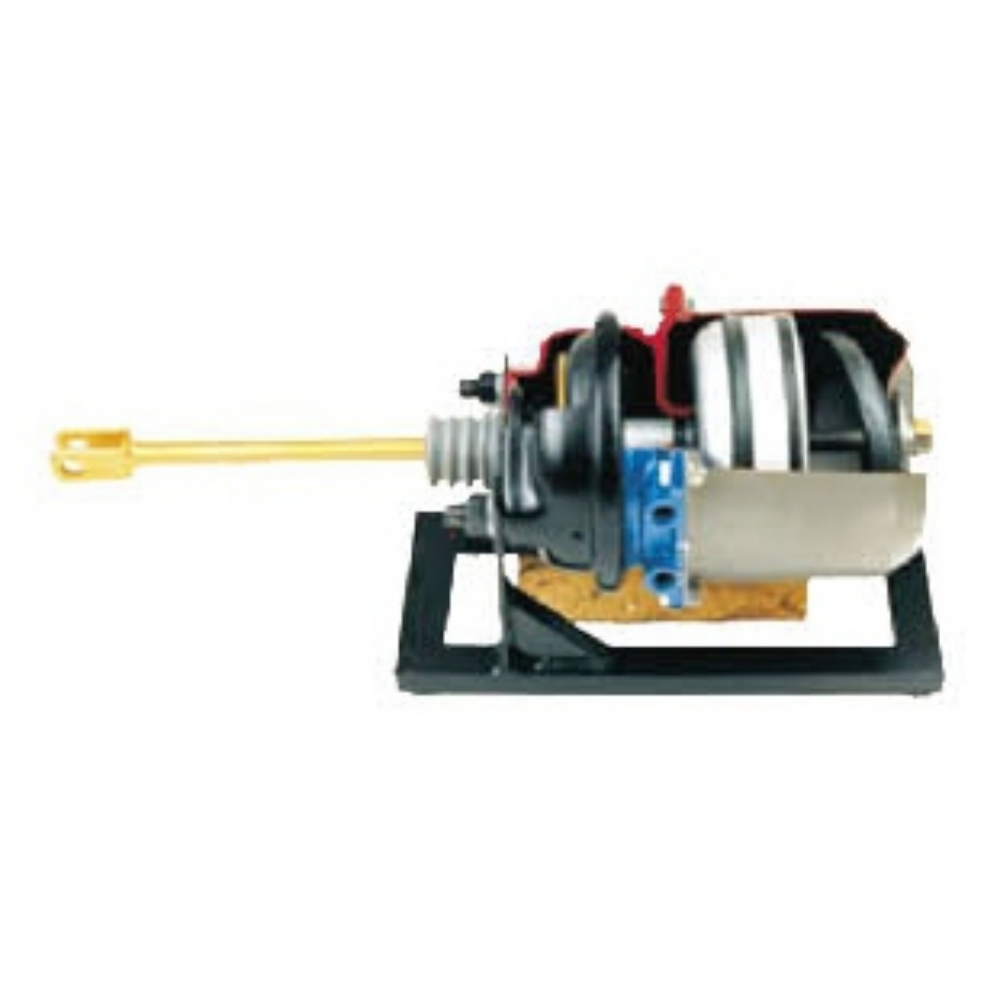
Spring-loaded brake cylinder dissected model
Delivery: EXW Guangzhou
Shipping Way: By Sea / Air / Express
Certification: CE/ ISO / GPSR / Copyrights / Patents...
OEM Service: Accept OEM Accept ODM
Customization: Logo / Size / Appearance / Material...
Technical Support: Software / Manual / Video / Technician
- Overview
- Recommended Products
Product Overview:
This product is a cross-sectional dissection teaching aid specifically designed for teaching and training automotive air pressure braking systems and spring-loaded braking systems. It uses a 1:1 replica of the actual vehicle structure and longitudinal sectional view technology to fully demonstrate the internal mechanical structure, air passages, and braking/release process of the spring-loaded brake cylinder. It is suitable for vocational schools, technical colleges, and automotive repair training institutions to conduct integrated theory and practice teaching, including structural understanding, principle demonstration, and fault simulation.
Features:
1. Uses a spring-loaded brake cylinder assembly (with complete accessories) for dissection. All components are included, providing a comprehensive display of the assembly's internal and external structure.
2. By dissecting and painting different colors on each section, the mechanical structure of the internal and external components and their assembly relationships are clearly displayed.
3. The equipment base frame (with shock-absorbing pads) is made of 1.5mm cold-rolled steel sheet, stamped and coated. The shock-absorbing pads are fixed to the base with M6*4 screws.
Training Project:
I. Basic Training Information
Training Name: Spring-Loaded Brake Cylinder Structure Recognition and Working Principle Training
Applicable to: Secondary/Higher Vocational Schools majoring in Automotive Application and Maintenance, Automotive Inspection, Commercial Vehicle Repair, etc.
II. Training Objectives
Accurately identify the names and functions of each component of the spring-loaded brake cylinder (spring-energy storage brake chamber).
Gain a deep understanding of the three working mechanisms of service brake, parking brake, and emergency brake.
Master the dynamic process of brake cylinder piston movement, and the compression and release of the powerful spring.
Be able to diagnose and troubleshoot common faults such as air leakage, pushrod jamming, and poor energy storage.
III. Training Content
Project 1: Structure Recognition and Component Identification
Project 2: Dynamic Demonstration of Three-Mode Working Principle
Project 3: Disassembly, Assembly, and Sealing Inspection
Project 4: Common Fault Simulation and Diagnosis