EN
EN

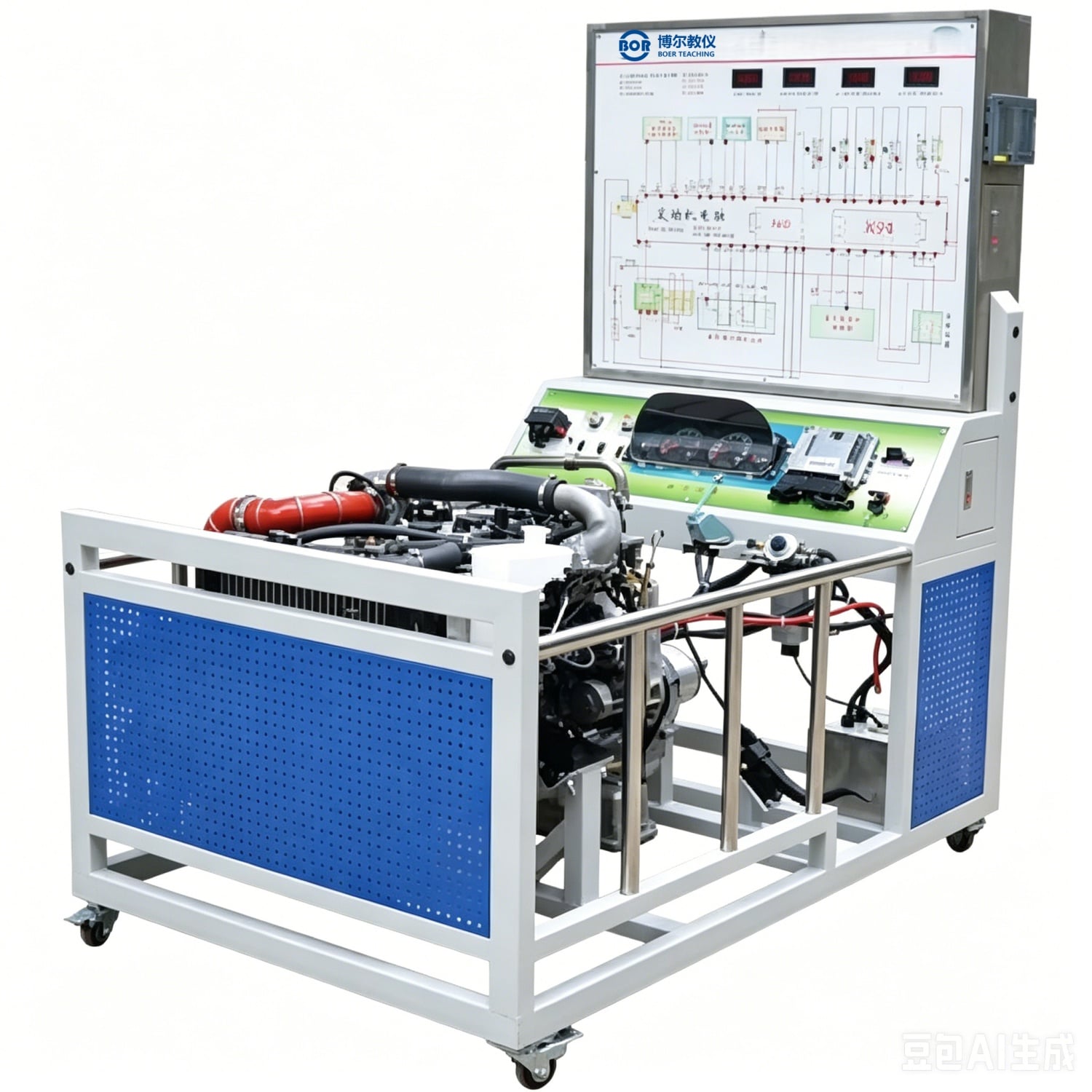
Electronic Control Diesel Engine Experimental Bench
| OEM Accept OEM Accept ODM |
| Application Training Institute & School |
| Customization Size / Appearance / Material... |
| Function Automotive Training |
| Warranty 2 years |
| Package Wooden Box |
| Technical Support Software / Instruction manual / Video / Technician guidance |
| Shipping Way By Sea / Air / Express |
| Certification ISO9001 / GPSR / Copyrights |
- Overview
- Recommended Products
Electronic Control Diesel Engine Experimental Bench
I. Product Overview:
This training bench is based on the original factory electronic control diesel engine. The engine is operational, allowing for actual operation of starting, acceleration, deceleration, fault detection and diagnosis, fault simulation and troubleshooting, etc., realistically demonstrating the structure, principle, and working process of an automotive electronic fuel injection gasoline engine. It is suitable for the practical training needs of various types of colleges and training institutions for automotive engine theory and maintenance.
This training bench is fully functional, easy to operate, safe, reliable, and aesthetically pleasing.
II. Components:
Original factory electronic control diesel engine assembly, original vehicle engine control computer, instrument cluster, all relevant original vehicle accessories for engine starting and operation, fault setting and troubleshooting system, original vehicle circuit diagram board and test terminals, large-capacity vehicle fuel tank matching the original vehicle fuel pump, B0AH large-capacity battery, engine acceleration mechanism, control panel cabinet, movable bench, bench power switch, OBD diagnostic connector, cooling system, bench operation manual. Each sensor and actuator is equipped with a digital display; the bench features a fuel pressure gauge and a vacuum gauge; it has locking swivel casters; stainless steel hand guards; and protective devices are added to high-temperature and rotating parts of the bench.
III. Product Features:
1. The engine runs normally, with normal starting, idling, and acceleration performance.
2. The fault simulation system can simulate actual operating conditions and set various common engine faults in real vehicles.
3. A voltmeter displays real-time changes in sensors and actuators; LED lights indicate the working status of various actuators such as fuel injector pulses.
4. Equipped with an original vehicle diagnostic connector, allowing the use of a computer diagnostic tool to read fault codes and data streams from the engine electronic control system.
5. The training bench panel uses a 5mm high-quality aluminum plate with a finely sprayed, color-printed circuit diagram. It will not fade, discolor, or deform for over 10 years. The silver-white edging is aesthetically pleasing and superior to plexiglass systems (plexiglass is prone to cracking and deformation due to time and environmental changes). Trainees can directly compare the circuit diagram with the actual engine to understand and analyze the working principle of the control system. 6. The training platform panel is equipped with testing terminals, allowing direct testing of electrical signals from various sensors, actuators, and engine control unit pins, such as resistance, voltage, current, frequency, and waveform signals.
7. The training platform is equipped with a main power switch, a water tank protective cover, and protective covers for the flywheel and other rotating parts, among other safety protection devices.
8. The training platform base is constructed with a welded steel structure, and the panel cabinet is stamped and separable from the base. The platform surface is finished with a baked enamel coating and features omnidirectional self-locking casters.
9. The engine wiring harness uses original components, ensuring more stable engine performance.
10. The fuel tank must be compatible with the fuel pump, and a filter screen must be installed at the filler neck. To ensure safe gasoline use, the fuel pump installation location must be sealed, meeting the quality requirements of automotive fuel tanks.
11. Equipped with a fault setting and assessment system.
12. Engine model optional;
IV. Product Specifications:
1. Overall Dimensions: 1400mm x 1000mm x 1720mm (Length x Width x Height);
2. Power Supply: 12V/60AH battery;
3. Fuel Tank Capacity: 10L;
4. Operating Temperature: -50℃~50℃;
5. Panel Finish: Aluminum panel with anodized paint finish, UV flat panel high-fidelity color printing, 10 years without discoloration, fading, or deformation, durable and aesthetically pleasing;
6. High-Quality Steel: 40×80×3.0 steel;
7. Safety Guardrail: 3.0 stainless steel, 2.5 perforated plate;