EN
EN

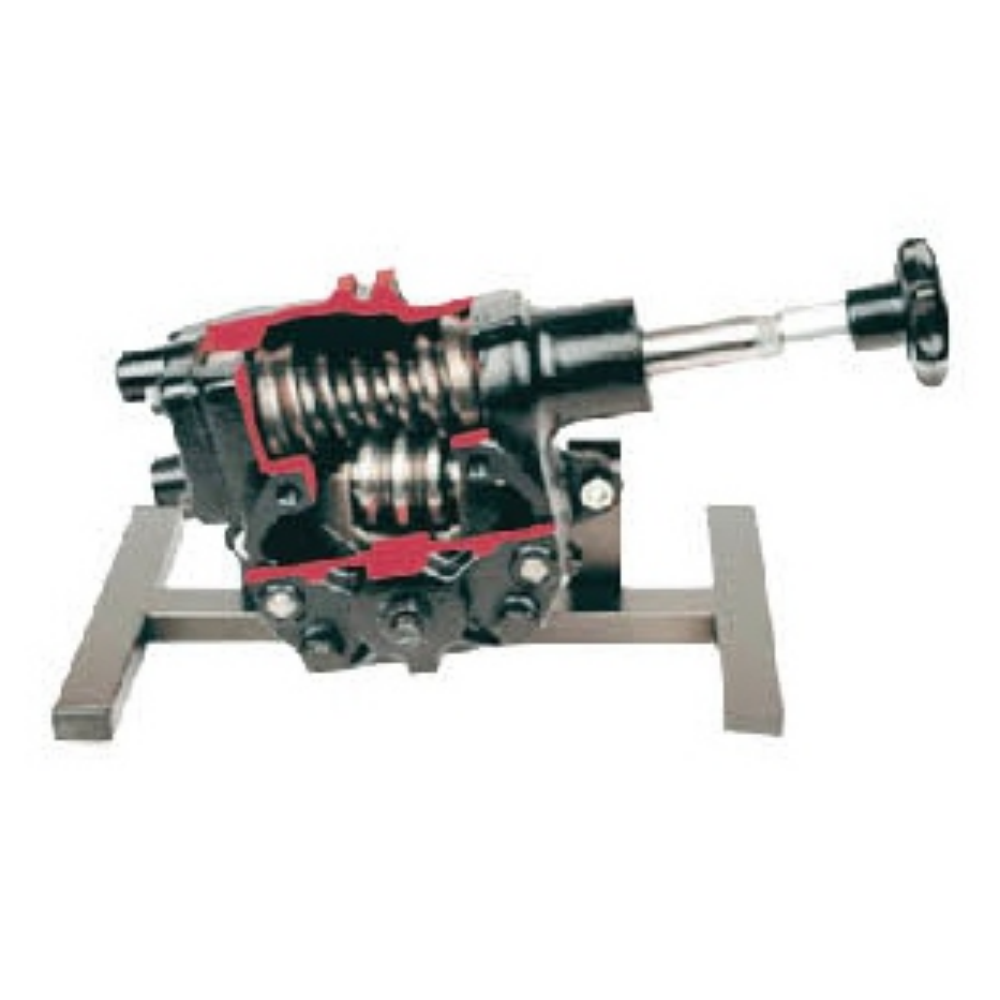
Worm Gear Steering System Anatomical Model
Delivery: EXW Guangzhou
Shipping Way: By Sea / Air / Express
Certification: CE/ ISO / GPSR / Copyrights / Patents...
OEM Service: Accept OEM Accept ODM
Customization: Logo / Size / Appearance / Material...
Technical Support: Software / Manual / Video / Technician
- Overview
- Recommended Products
Product Overview:
This product is a dissected teaching model of a worm gear steering gear, specifically designed for automotive chassis teaching and practical training demonstrations. Based on the original factory worm gear steering gear, it has undergone precise cross-sectional machining and structural optimization to fully reproduce the core structure and working logic of the steering gear. It is suitable for integrated theory and practice teaching in automotive application and maintenance, new energy vehicle technology, and automotive chassis construction. It effectively addresses the teaching pain points of traditional steering gears, such as their enclosed internal structure and abstract working principles, making them difficult for students to intuitively understand. This helps teachers and students efficiently complete structural cognition, principle explanation, and practical training demonstrations.
The model strictly adheres to the structural proportions and assembly standards of the original factory steering gear, fully retaining all core functional components without structural omissions or functional simplifications, ensuring the authenticity and relevance of the teaching. The core structure includes the steering worm, steering worm wheel, steering rocker arm shaft, housing, bearings, oil seals, adjusting screws, input shaft, and output shaft. All components are precisely replicated to the actual dimensions, clearly showing the assembly relationships, connection methods, and motion coordination logic of each component, perfectly reproducing the core structural features of the worm gear meshing transmission.
In terms of anatomical design, a precise radial sectioning process is employed. The cut surfaces are finely ground and polished, resulting in a smooth, burr-free surface that clearly exposes the meshing surfaces of the worm gear and worm, internal oil passages, bearing mounting positions, sealing structures, and adjustment mechanisms, completely breaking through the teaching bottleneck of being "invisible and intangible." Simultaneously, the model utilizes a differentiated color spraying process to color-code key components such as the steering worm, worm wheel, housing, rocker arm shaft, and bearings. Combined with clear component markings and transmission direction labels, the function and location of each component can be quickly distinguished, reducing the difficulty for students in structural identification and principle understanding, and improving teaching efficiency.
The functional design caters to both static display and dynamic demonstration needs, adapting to diverse teaching scenarios. In its static state, the model allows for direct observation of the structural details, meshing clearances, and assembly precision of each component, providing a clear understanding of the structural characteristics of a worm gear steering system. In its dynamic state, the model retains manual drive functionality; rotating the input shaft drives the worm and worm wheel to move synchronously, visually demonstrating the transmission of steering power—the worm's rotation drives the worm wheel, which in turn drives the rocker arm shaft to swing. This fully replicates the core working principle of the steering system: "converting rotational motion into linear oscillation." Operation is convenient, the demonstration is intuitive, and no complex external equipment is required, making it suitable for direct classroom demonstrations and student practice.
The model features a sturdy cold-pressed steel base with anti-vibration pads on the bottom, effectively preventing slippage and tipping during training. It is also convenient for desktop placement, classroom demonstrations, and practical training. Its dimensions are suitable for teaching scenarios, making it easy to carry, store, and move. The entire model is constructed from high-strength, durable materials, with robust component connections that can withstand repeated manual rotation and disassembly training, meeting long-term teaching needs and reducing the likelihood of loosening, damage, or deformation. The surface is treated with anti-corrosion materials to effectively resist dust and oil, extending the model's lifespan.
The core value of this product lies in transforming the abstract working principle of steering gears into a visualized and operable physical model. It assists teachers in classroom theoretical explanations and structural demonstrations, helping them quickly convey core knowledge points. It also allows students to quickly master the structural identification, working principle, and core characteristics of worm gear steering gears through hands-on operation, observation, and disassembly/assembly, cultivating their practical observation and hands-on skills. As a core training device for teaching automotive chassis steering systems, this model can be widely used in integrated theory and practice teaching, practical training assessments, and skills training in higher vocational colleges, secondary vocational schools, technical schools, and automotive training institutions, providing efficient and intuitive support for teaching steering system-related knowledge points.
Features:
1. Dissected using a worm gear steering gear assembly (with complete accessories), all components are included, comprehensively showcasing the internal and external structure of the assembly.
2. Through dissection and different colors painted on each section, the mechanical structure of the internal and external components and their assembly relationships are clearly displayed.
3. The equipment base frame (with shock-absorbing pads) is made of 1.5mm cold-rolled steel sheet, stamped and surface-treated with a spray coating process. The shock-absorbing rubber pads are fixed to the base with M6*4 screws.
Training Projects:
Project 1: Structural Understanding and Principle Demonstration
Project 2: Standardized Disassembly and Assembly and Component Inspection
Project 3: Adjustment of Meshing Clearance and Bearing Preload
Project 4: Simulated Diagnosis and Troubleshooting of Common Faults
Project 5: Training Summary and Documentation