EN
EN
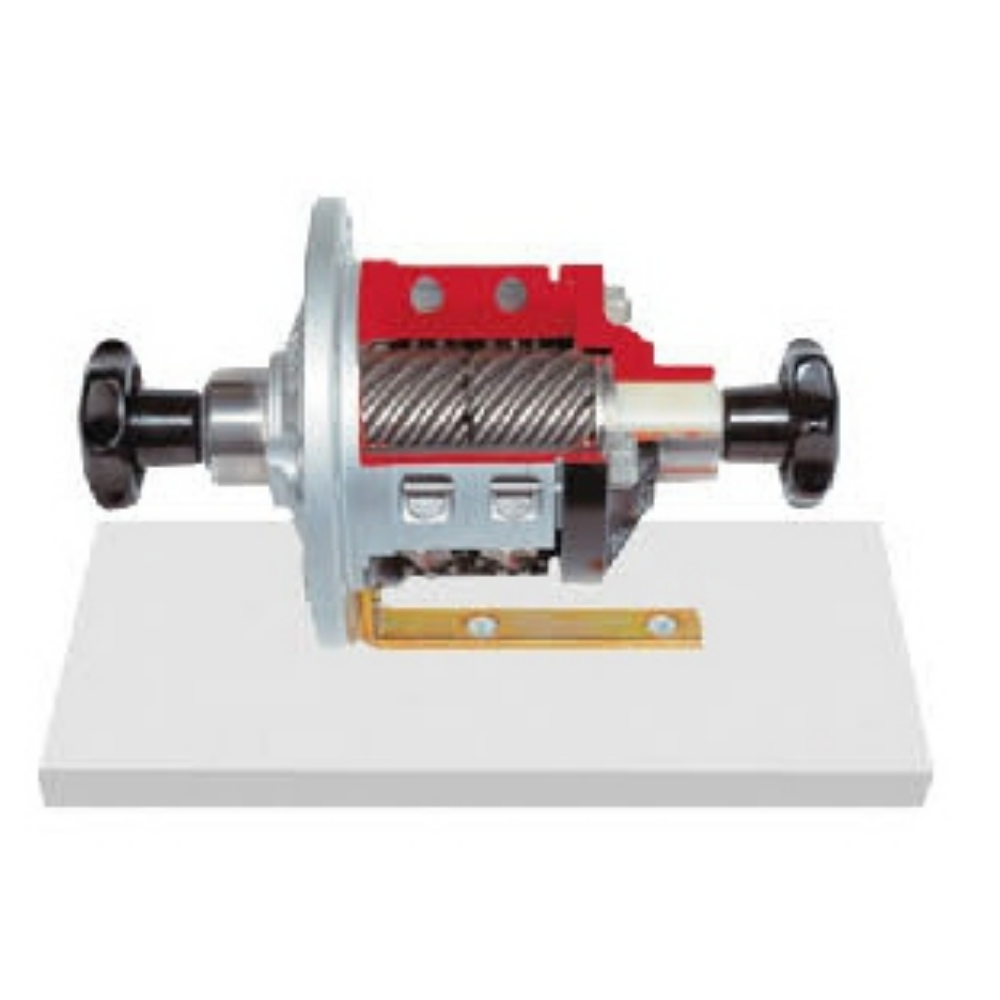
Torson Center Differential Anatomical Model
Delivery: EXW Guangzhou
Shipping Way: By Sea / Air / Express
Certification: CE/ ISO / GPSR / Copyrights / Patents...
OEM Service: Accept OEM Accept ODM
Customization: Logo / Size / Appearance / Material...
Technical Support: Software / Manual / Video / Technician
- Overview
- Recommended Products
Product Overview:
This product is a professional teaching and training model based on a real Torson center differential prototype, precisely machined through cross-section. It is specifically designed for automotive inspection and repair, new energy vehicle technology, and automotive chassis construction, among other related majors. Its core purpose is integrated theory and practice teaching, practical demonstrations, and skills assessments. It aims to address the teaching pain points of the Torson center differential's intricate internal structure, abstract working principles, and the inability to directly observe the actual component, helping teachers and students quickly understand its core mechanical limited-slip characteristics and power transmission logic.
The model is based on the original Torson center differential assembly, strictly adhering to the original component proportions and assembly relationships. All core functional components are fully preserved without any structural omissions or functional simplifications. The core structure includes the differential housing, front output worm shaft, rear output worm shaft, worm gear set (including the worm gear shaft), spur gear pair, bearings, oil seals, and input flange. All components are precisely replicated to the actual dimensions, ensuring structural authenticity and targeted teaching.
In terms of anatomical design, precise radial and axial sectioning is employed, with the cut surfaces finely polished to a smooth, burr-free finish. This clearly exposes internal oil passages, the meshing structure of the worm gear and worm shaft, the transmission relationship of the spur gears, and the assembly positions of bearings and oil seals, completely breaking through the teaching bottleneck of being "invisible and intangible." Simultaneously, the model uses a differentiated color spraying process to color-code key components such as the differential housing, worm shaft, worm gear, gears, and bearings. Combined with clear component markings and oil passage labels, the function and assembly relationship of each component can be quickly distinguished, reducing the difficulty of structural identification.
In terms of functional design, the model caters to both static display and dynamic demonstration needs. In its static state, the structural details, assembly gaps, and connection methods of each component can be observed intuitively, providing a clear understanding of the unidirectional self-locking characteristics of the worm gear. In its dynamic state, the model retains manual drive functionality; rotating the input flange demonstrates the power transmission path and torque distribution process between the front and rear output shafts under three typical working conditions: straight-line driving, turning, and single-shaft slippage. This intuitively presents the core working principle of the Torsen differential: "rigid transmission when there is no speed difference, and automatic slip limitation when there is a speed difference." No complex external equipment is required, making operation convenient and the demonstration effect intuitive.
The model is equipped with a sturdy cold-pressed steel base with anti-vibration pads on the bottom, effectively preventing slippage and tipping during training. It is also convenient for desktop placement, classroom demonstrations, and practical training. Its dimensions are suitable for teaching scenarios, making it easy to carry and store. The entire model is made of high-strength, durable materials, with strong component connections that can withstand repeated manual rotation and disassembly training, meeting the needs of long-term teaching use and reducing the likelihood of component damage or loosening.
The core value of this product lies in transforming the abstract principle of mechanical limited-slip differential into a visualized and operable physical model. It assists teachers in classroom theoretical explanations and structural demonstrations, while also allowing students to quickly grasp the structural identification, working principle, and core characteristics of the Torsen center differential through hands-on operation, observation, and disassembly/assembly. This cultivates students' practical observation and hands-on skills, making it an essential teaching equipment for integrated theory and practice teaching and assessment in automotive majors. It can be widely used in teaching scenarios in higher vocational colleges, secondary vocational schools, technical schools, and automotive training institutions.
Features:
1. Uses a Torsen center differential assembly (with complete accessories) for dissection, showcasing all components and comprehensively displaying the assembly's internal and external structure.
2. Through dissection and different colors painted on each section, the mechanical structure of the internal and external components and their assembly relationships are clearly displayed.
3. The equipment base frame (with anti-vibration pads) is made of 1.5mm cold-rolled steel sheet, stamped and coated. The anti-vibration pads are fixed to the base with M6*4 screws.
Training Project:
I. Basic Training Information
- Training Name: Torson Central Differential Anatomical Model Structure Recognition, Disassembly, Assembly, and Principle Training
- Applicable Majors: Automotive Inspection and Repair Technology, New Energy Vehicle Technology, Automotive Chassis Structure and Repair, Engineering Machinery Application Technology
- Prerequisite Knowledge: Composition of Automotive Transmission Systems, Working Principle of Ordinary Open Differentials, Basic Characteristics of Worm Gear Drives
II. Training Objectives
(I) Knowledge Objectives
(II) Skill Objectives
(III) Competency Objectives
III. Training Focus and Difficulties
- Training Focus: Identification of core components of the Torson central differential; standardized disassembly and assembly of the model; demonstration and verbal explanation of the working principles under three typical operating conditions.
- Training Difficulties: Understanding the unidirectional self-locking characteristics of worm gears and their role in limited-slip function; distinguishing the power transmission path and torque distribution logic under different operating conditions; judging and simulating fault phenomena.
IV. Training Content and Steps
First Lesson: Training Preparation and Structural Understanding
(I) Pre-Lesson Preparation (10 minutes)
(II) Structural Identification Training (35 minutes)
Second Lesson: Static Disassembly and Assembly Training
(I) Disassembly Training (25 minutes)
(II) Assembly Training
Third Lesson: Dynamic Demonstration and Analysis of Working Principle
(I) Principle Explanation
(II) Working Condition Demonstration and Analysis
Fourth Lesson: Common Fault Simulation and Troubleshooting + Training Summary
(I) Fault Simulation and Troubleshooting
(II) Training Summary