EN
EN

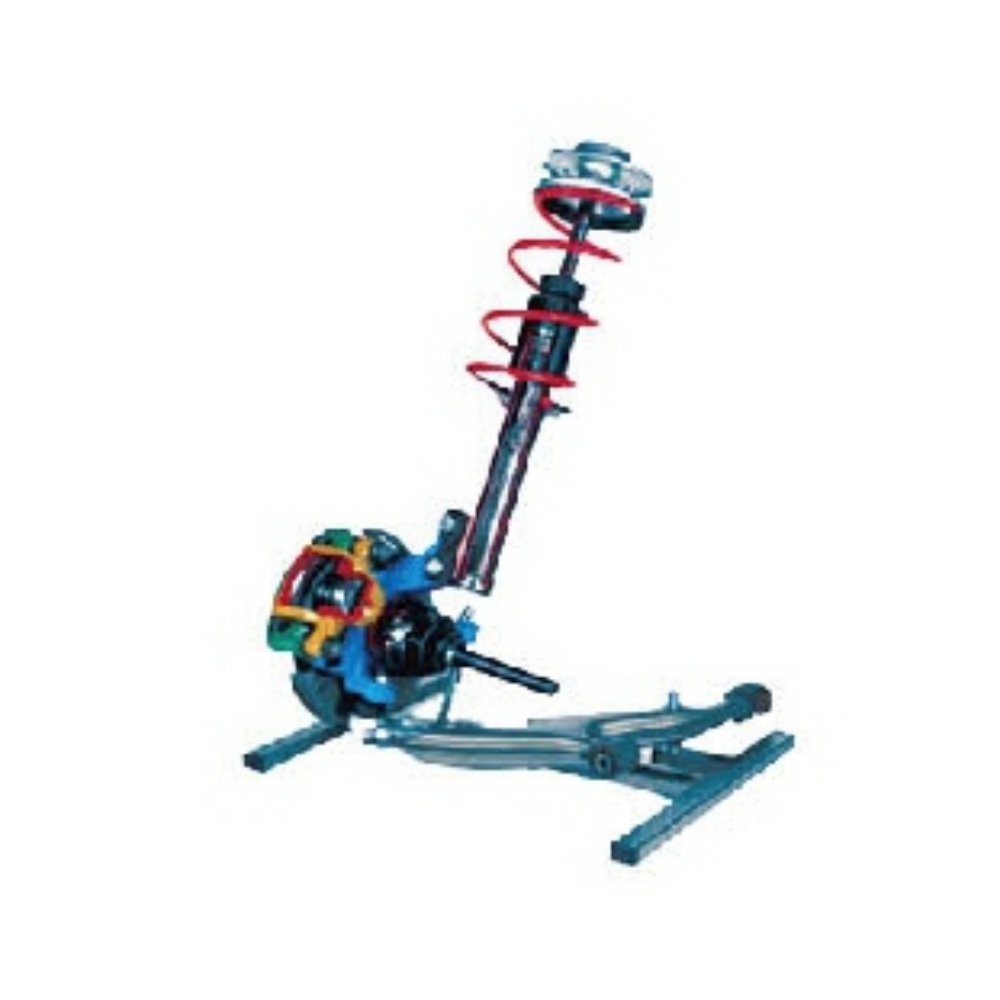
Suspension assembly dissected model (with A-arm, drive shaft, disc brakes)
Delivery: EXW Guangzhou
Shipping Way: By Sea / Air / Express
Certification: CE/ ISO / GPSR / Copyrights / Patents...
OEM Service: Accept OEM Accept ODM
Customization: Logo / Size / Appearance / Material...
Technical Support: Software / Manual / Video / Technician
- Overview
- Recommended Products
Product Overview:
The recirculating ball power steering system anatomical model is a professional integrated theory and practice teaching and training device designed specifically for vocational schools majoring in automotive engineering, new energy vehicles, and automotive chassis repair, as well as automotive repair training institutions and automotive parts enterprise technical centers. Based on the original recirculating ball power steering system (compatible with mainstream passenger and commercial vehicle models), the model uses precise dissection, layered cutting, and color-coded functional annotations to fully present the core structures such as the recirculating ball mechanism, rack and pinion drive, hydraulic power assist circuit, and steering shaft linkage. It intuitively demonstrates the synergistic working principle of "recirculating ball drive + hydraulic power assist," effectively solving the teaching pain points of "hidden internal transmission structure and difficult-to-understand power assist logic" in traditional teaching. It is a core teaching tool for deeply integrating theoretical teaching and practical training of chassis steering systems.
Features:
Physical Dissection + Color Differentiation:Precise dissection using a real assembly (such as a Dongfeng truck steering gear) preserves complete core components such as the screw, nut, circulating steel ball, rack and pinion, and hydraulic power assist cylinder/valve assembly. Key sections and different parts are painted in different colors, visually presenting assembly relationships and internal flow channels/transmission paths.
Static Full Structural Visualization: The shell is opened/dissected, allowing clear observation of the two-stage transmission (screw-nut rolling friction, rack-pinion motion conversion) and the hydraulic power assist's oil circuit interface and control valve structure. The accompanying base with shock-absorbing pads ensures stable placement and facilitates classroom demonstrations and group observations.
Dynamic Demonstration: Some high-end models allow manual rotation of the input shaft to simulate steering actions, observing the steel ball circulation, nut linear movement, and the rotational output of the pinion/rocker arm shaft. If connected to a hydraulic power source, the power assist operation process can also be demonstrated.
Dynamic Demonstration: Some high-end models allow manual rotation of the input shaft to simulate steering actions, observing the steel ball circulation, nut linear movement, and the rotational output of the pinion/rocker arm shaft. Teaching and Practical Training Functions
Principle Teaching: Used to explain the mechanical transmission principle of recirculating ball steering and the control logic of hydraulic power assist, helping students understand how rolling friction improves efficiency by replacing sliding friction (transmission efficiency can reach 90%~95%).
Disassembly and Testing: Can be used as a disassembly and assembly training platform for practicing seal replacement, steel ball circulation system inspection, and meshing clearance adjustment; it can also be used to teach diagnostic approaches for common faults (such as jamming, insufficient power assist).
Standardized Cognition: Key component names are labeled to establish a unified understanding of structural terminology; suitable for classroom demonstrations, practical training assessments, and skills competitions in vocational school automotive majors.
Craftsmanship and Durability Features
Reliable Materials: Dissected parts are refurbished original assemblies/dedicated teaching parts; the base is mostly made of 1.5mm cold-rolled steel plate with a rust-proof coating; the connections are firm, preventing accidental damage.
Safety Design: No exposed sharp edges; hydraulic interfaces have protective covers; static models do not require electricity, and manual operation poses no safety hazards.
Easy Maintenance: Parts are not easily detached; the color-coated coating is wear-resistant; daily cleaning of dust is sufficient, requiring no complex maintenance.
Training Projects:
I. Training Objectives
To understand the overall structure of a recirculating ball power steering system and the names and functions of its components.
To understand the working principles of recirculating ball mechanical transmission and hydraulic power assist.
To master the power transmission route, oil circuit flow, and control valve operation of the steering system.
To be able to analyze the causes of typical faults and troubleshooting strategies through dissecting a model.
II. Training Project Contents (6 items in total, can be directly included in the outline)
Project 1: Overall Structure Recognition and Component Identification
Project 2: Demonstration and Observation of Recirculating Ball Transmission Principle
Project 3: Demonstration of Hydraulic Power Assist Working Principle
Project 4: Steering System Meshing Clearance and Free Travel Inspection
Project 5: Typical Fault Simulation and Analysis
Project 6: Disassembly and Assembly Process and Key Points (Applicable to models that can be dissected and disassembled)