EN
EN

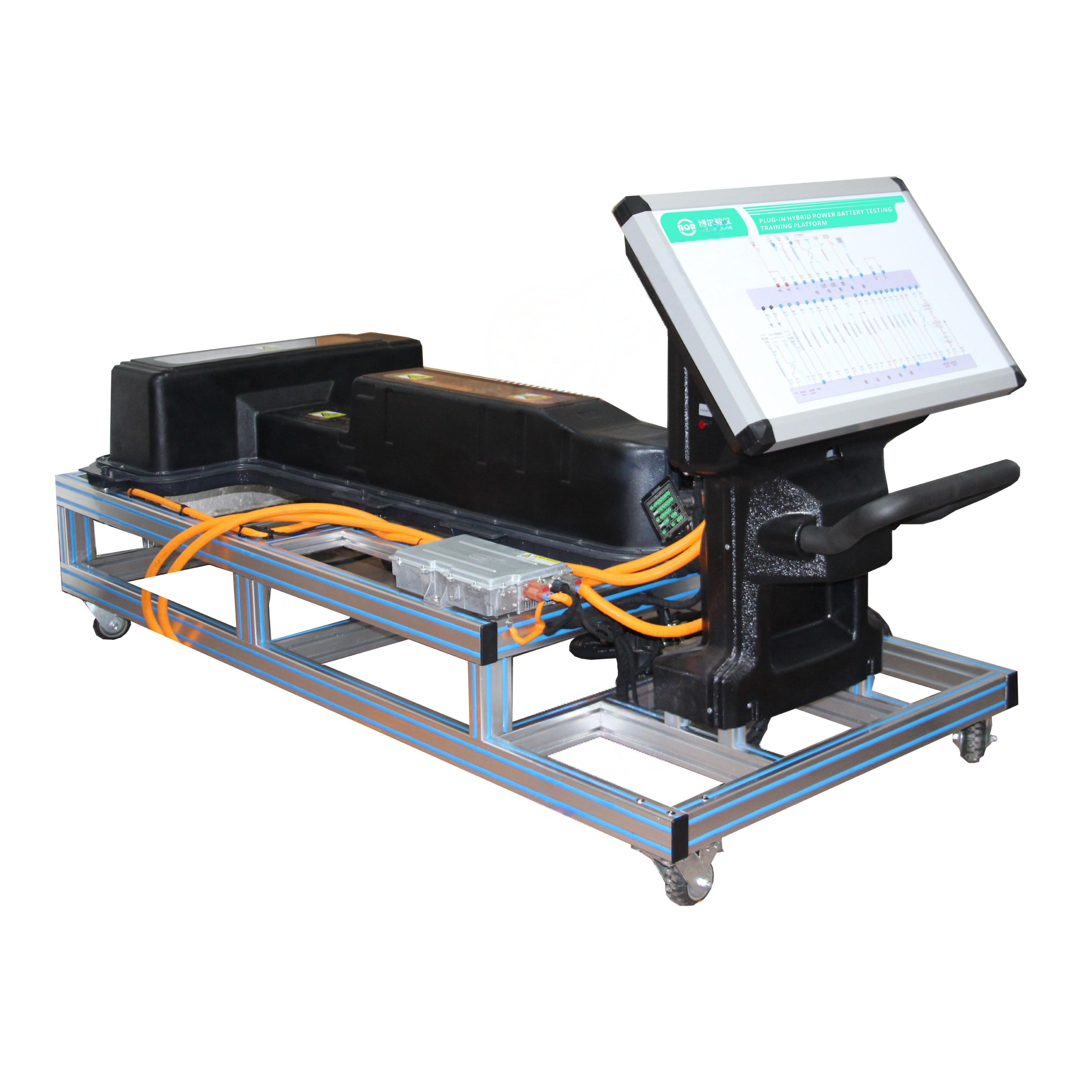
Plug-in Hybrid Battery Testing Training Platform
Minimum Order : 1 Set
Warranty: 2 years
Delivery: EXW Guangzhou
Shipping Way: By Sea / Air / Express
Certification: ISO / GPSR / Copyrights / Patents...
OEM Service: Accept OEM Accept ODM
Customization: Logo / Size / Appearance / Material...
Technical Support: Software / Manual / Video / Technician
- Overview
- Recommended Products
Product Overview:
Based on a real BYD pure electric vehicle power battery, this product includes a power battery pack and a battery management unit, fully demonstrating the internal structure, control principles, and performance parameters of the power battery. It is suitable for teaching the principles of pure electric vehicle power battery systems in vocational schools and training institutions.
Features:
1. Uses an original BYD power battery pack (including a BMS management system). The power battery pack adopts a distributed battery management system, consisting of a battery management controller (BMC), a battery information collector, and battery sampling lines. The main functions of the battery management controller include charge/discharge management, contactor control, power control, battery abnormal state alarms and protection, SOC/SOH calculation, self-testing, and communication functions. The main functions of the battery information collector include battery voltage sampling, temperature sampling, battery equalization, and sampling line anomaly detection. The main function of the power battery sampling lines is to connect the battery management controller and the battery information collector, enabling communication and information exchange between the two.
2. All major components are mounted on the platform, with electrical connections identical to the actual vehicle. This allows for easy disassembly after power failure, enabling trainees to master the key points and safety precautions for disassembling and reconnecting high-voltage system components. The battery pack cover uses an acrylic casing consistent with the original vehicle's battery shape, facilitating observation of the battery's internal structure.
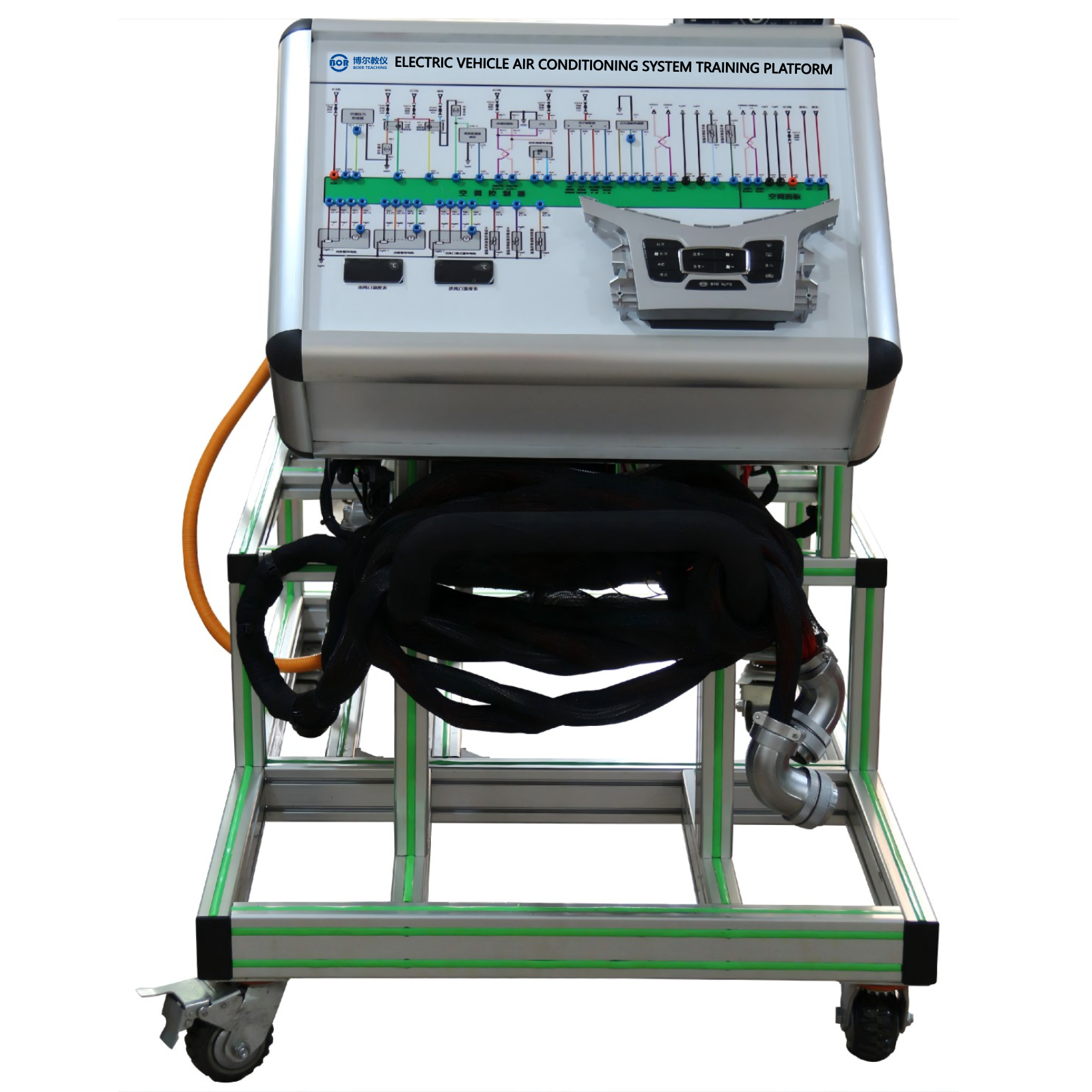
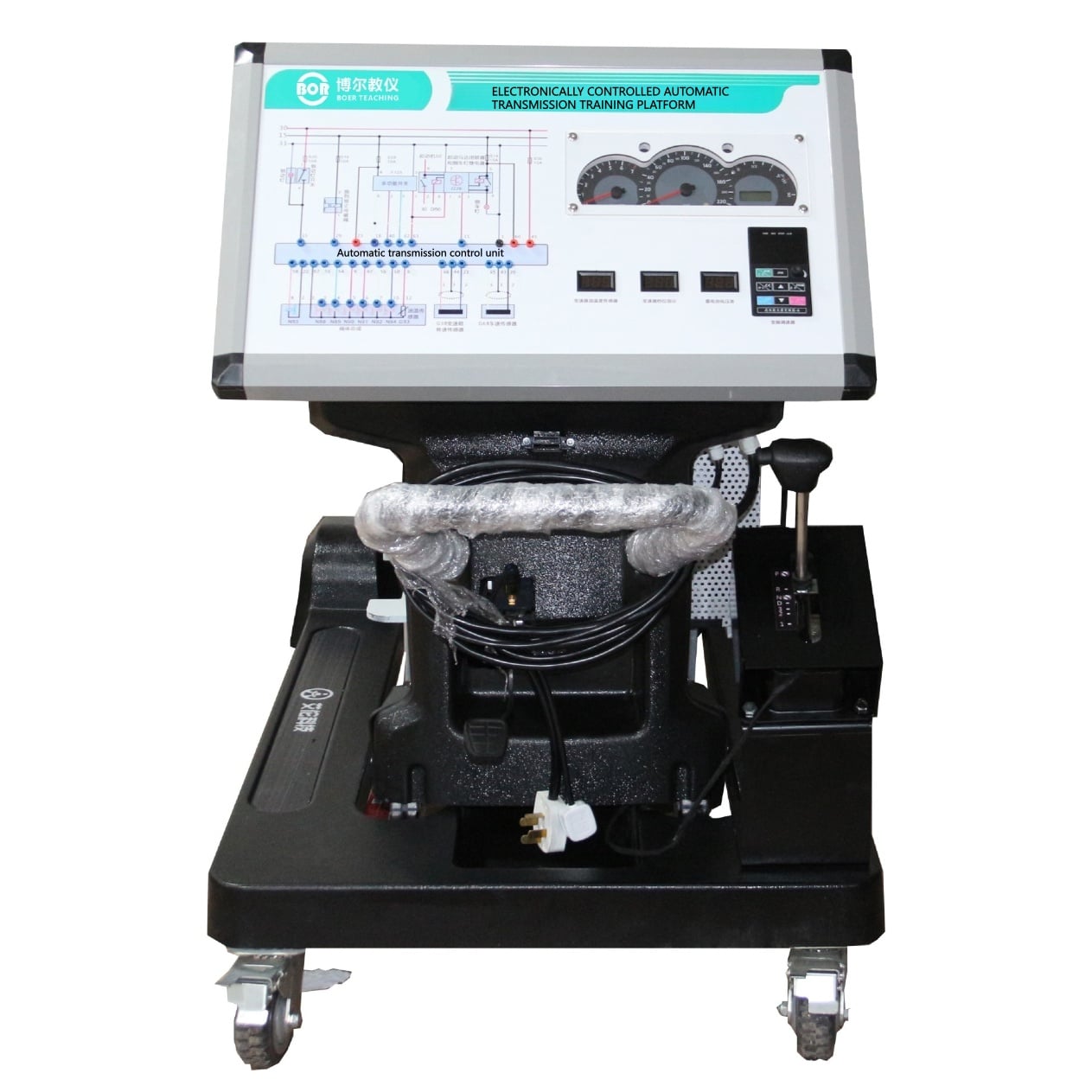
3. This training platform provides a power source for the "Drive Transmission System" and "Air Conditioning Control System" training platforms. The connecting cables are original vehicle components, and the connection method is the same.
4. The training platform is equipped with a 12V power grounding mechanical switch, allowing for immediate disconnection of the 12V ground to cut off the power to the entire system.
5. Intelligent fault assessment function: This consists of two independent systems: a teacher fault setting terminal and a student answering terminal, installed on a mobile terminal. Teachers can connect to the fault setting module using their mobile teaching terminal to set faults. After setting the faults, students take the assessment using their mobile learning terminal. Assessment results are automatically stored in the device execution module, allowing teachers to easily check each student's scores.
6. To facilitate sensor and actuator identification and measurement, and to replicate the real-vehicle testing scenario while minimizing connector damage from plug insertion and removal, a ≥5cm testing terminal must be connected in parallel next to the original vehicle wiring harness connector. The testing terminal is made of transparent acrylic material, laser-engraved and flatbed-painted, with a shape identical to the original vehicle connector's planar shape. The measuring terminal uses dedicated testing terminals, labeled with the measurement angle number and the sensor/actuator name. Electrical signals such as resistance, voltage, current, and frequency signals can be directly measured at the measuring terminals of each sensor, actuator, and engine control unit pin. Multimeters and oscilloscopes can be used to monitor parameter changes under various conditions in real time.
7. The training platform is assembled with a European standard aluminum profile frame, ensuring sturdiness, reliability, and colorfastness. Four casters are installed at the bottom of the platform for flexible movement, and the casters also have self-locking devices for positional fixation.
8. A dedicated real-vehicle decoder is used to read OBDII interface fault codes from the vehicle, ensuring the authenticity of vehicle fault data and operational realism to the greatest extent possible.
9. All high-voltage components on the test bench are protected by high-transparency acrylic glass, with necessary movable windows for connecting these components. This ensures that the high-voltage components and cables are not damaged during daily storage, preventing any degradation in insulation performance.
10. The test bench panel is printed with circuit diagrams and equipped with testing ports. Using a multimeter and oscilloscope, parameter changes under various conditions can be monitored in real time.
11. The test bench comes with a training manual.
Technical Specifications:
1. Rated Total Voltage: 422.4V
2. Low-Voltage Control Power Supply: DC12V
3. Power Battery Type: Lithium Iron Phosphate Battery
Training Objectives:
1. Understand the voltage level and capacity of BYD's individual power batteries.
2. Understand the composition, voltage level, and capacity of BYD's power battery packs.
3. Understand the composition and functions of BYD's Battery Management System (BMS).
4. Be familiar with how BYD's BMS collects the voltage difference of the power battery pack.
5. Be familiar with how BYD's BMS collects the temperature difference of the power battery pack.
6. Be familiar with the working principle of BYD's distributed battery management system (BMS).
7. Be familiar with the logic control relationships of BYD's power battery pack under various states, and master the changing patterns of parameters such as current, voltage, battery voltage difference, and battery temperature.
8. Understand the safety precautions for operating BYD's high-voltage system and learn how to plug and unplug high-voltage connectors.
9. Be familiar with the fault phenomena of BYD's power battery pack (BMS) and learn to find the causes of faults based on the logic control relationships.
10. Understand the characteristics of BYD's AC slow charging.