EN
EN
Pump-valve-nozzle integrated anatomical model
Delivery: EXW Guangzhou
Shipping Way: By Sea / Air / Express
Certification: CE/ ISO / GPSR / Copyrights / Patents...
OEM Service: Accept OEM Accept ODM
Customization: Logo / Size / Appearance / Material...
Technical Support: Software / Manual / Video / Technician
- Overview
- Recommended Products
Product Overview:
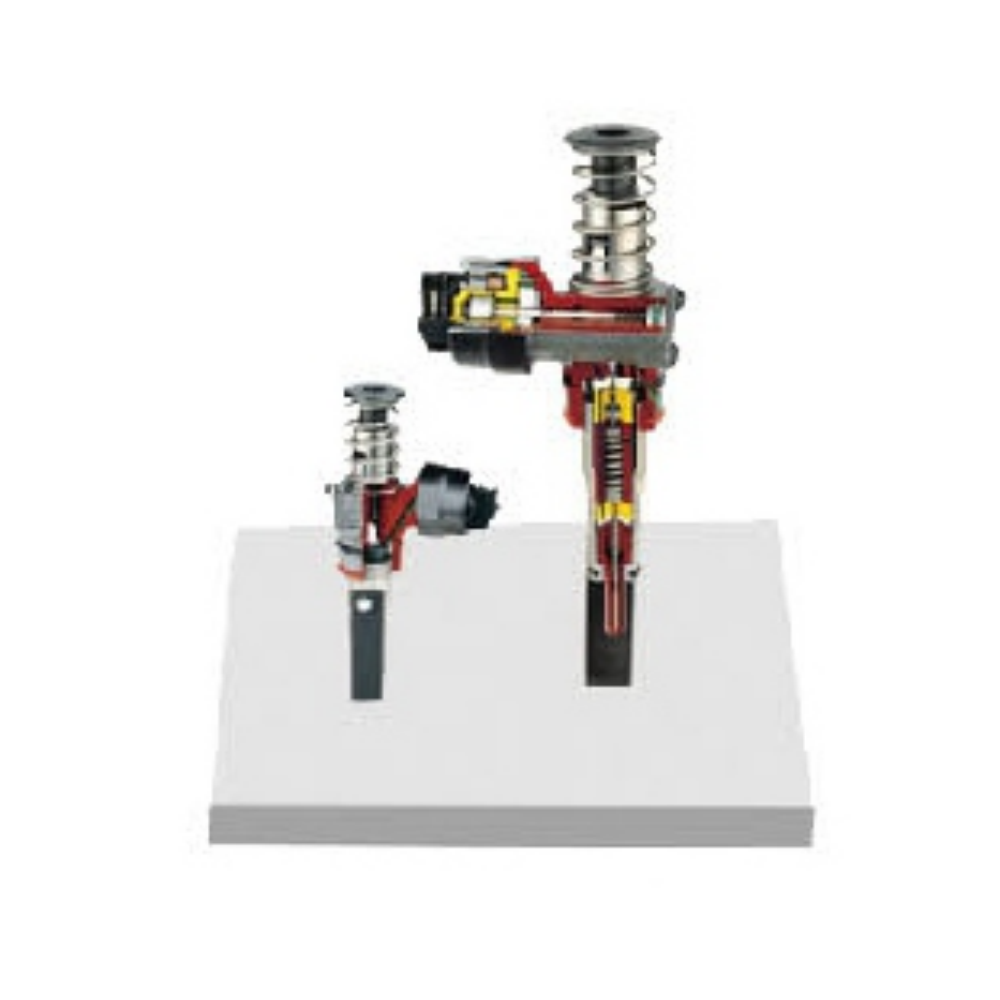
This model is a teaching/demonstration device based on a real pump-valve-nozzle assembly (commonly found in diesel engine high-pressure common rail systems and industrial spray systems). It features professional dissection, reinforcement, and color-coded partitioning. It visually presents the structure, assembly relationships, and working principles of key components such as the pump body, valve core, nozzle, oil passages, and seals, addressing the pain point of obscured internal structures.
Features:
1. Uses a fully dissected pump-valve-nozzle assembly (with complete accessories), showcasing all components and comprehensively displaying the assembly's internal and external structures.
2. Through dissection and different colors applied to each section, the mechanical structure of internal and external components and their assembly relationships are clearly displayed.
3. The equipment base (with shock-absorbing pads) is made of 1.5mm cold-rolled steel sheet, stamped and coated. The shock-absorbing pads are fixed to the base with M6*4 screws.
Training Project:
I. Training Objective:
To be able to identify the names, locations, and functions of each component in a pump-valve-nozzle assembly. Understand the structural relationships between the pump body, control valve, nozzle needle valve, oil passages, and seals.
Master the workflow of pump-valve-nozzle integrated oil supply—pressure regulation—injection.
Be able to identify common fault locations and failure modes through dissecting models.
Cultivate standardized observation, recording, and analysis habits in practical training.
II. Training Content
Task 1: Overall Appearance and Installation Location Recognition
Task 2: Component Identification and Labeling
Task 3: Internal Oil Circuit and Flow Path Analysis
Task 4: Demonstration and Explanation of Working Principle
Task 5: Recognition of Typical Faults
Task 6: Training Summary and Organization