EN
EN
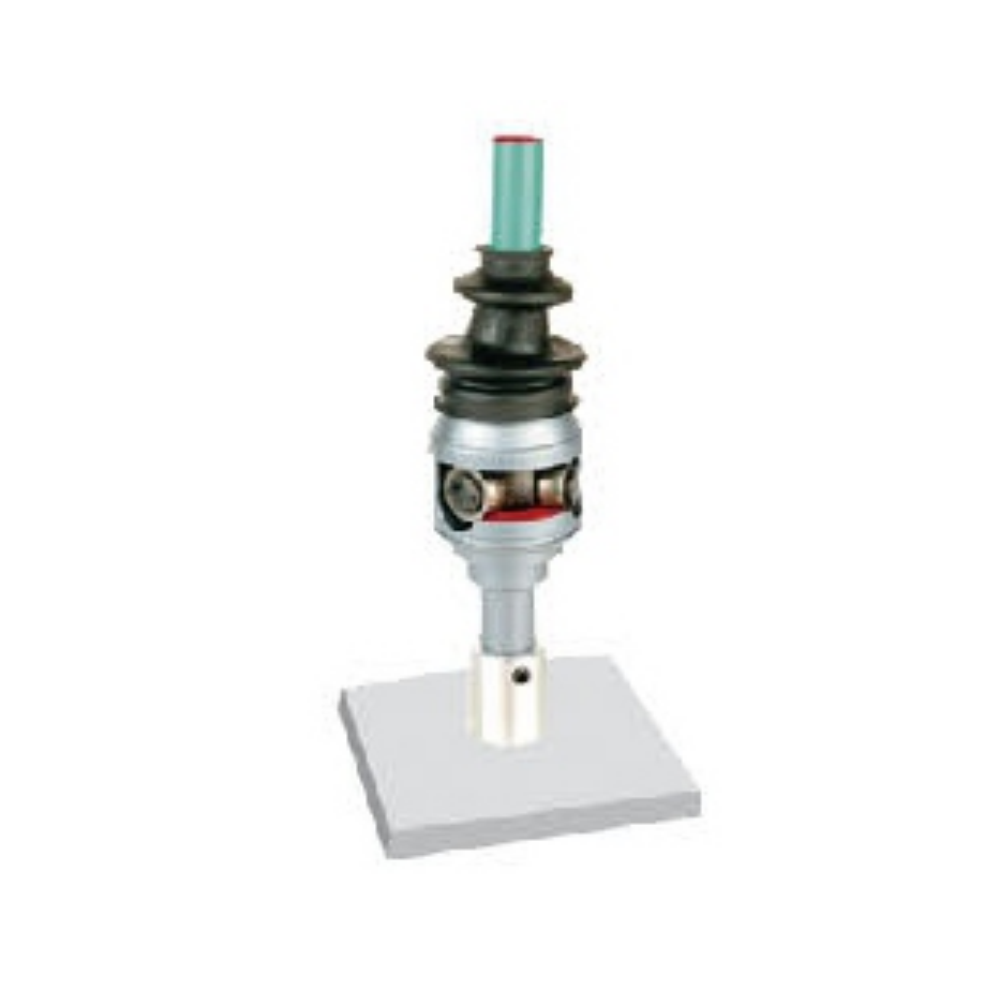
Anatomical model of the ball coupling
Delivery: EXW Guangzhou
Shipping Way: By Sea / Air / Express
Certification: CE/ ISO / GPSR / Copyrights / Patents...
OEM Service: Accept OEM Accept ODM
Customization: Logo / Size / Appearance / Material...
Technical Support: Software / Manual / Video / Technician
- Overview
- Recommended Products
Product Overview:
This product is a dissected teaching aid specifically designed for automotive professional teaching and training. Based on a real automotive ball-cage constant velocity universal joint, it uses partial slicing and transparency to visually demonstrate its internal structure and transmission principles. It is suitable for teaching chassis transmission systems in vocational schools, technical schools, and automotive training institutions.
Features:
1. Dissected using a ball coupling assembly (with complete accessories), all components are included, providing a comprehensive display of the assembly's internal and external structure.
2. Different colors are used for each section, clearly showing the mechanical structure of the internal and external components and their assembly relationships.
3. The equipment base frame (with shock-absorbing pads) is made of 1.5mm cold-rolled steel sheet, stamped and coated. The shock-absorbing pads are fixed to the base with M6*4 screws.
Practical Training Project:
I. Training Objectives
Cognitive Objective: To enable trainees to accurately identify the components of the ball joint anatomical model (bell-shaped housing, star-shaped sleeve, cage, steel balls, dust cover, etc.) and master the external features and installation positions of each component.
Principle Objective: Through model operation, to understand the core principle of constant velocity transmission in a ball-cage constant velocity universal joint and clarify the role mechanism of the steel balls in transmission.
Skill Objective: To master the basic assembly logic of ball joints and be able to analyze the causes and effects of common faults (such as dust cover damage and steel ball wear) using the model, laying a foundation for subsequent practical repair work.
II. Training Participants
Vocational school students majoring in automotive inspection and repair technology, junior technicians in the automotive repair industry, and trainees from automotive training institutions.
III. Training Content and Steps
(I) Structural Cognition Training
(II) Transmission Principle Practical Training
(III) Fault Analysis and Troubleshooting Training